Yuri Bezmenov’s Warning: Are We Watching It Happen?
In 1984, a former Soviet propagandist sat down for an interview that millions around the world would eventually view. His name was Yuri Bezmenov, AKA Tomas Schuman.
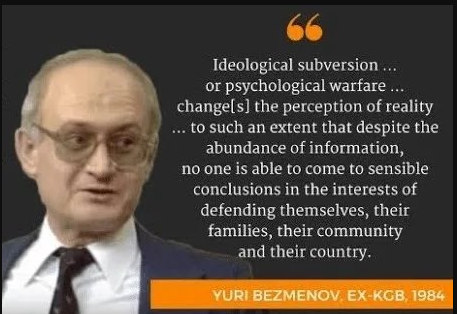
Born in the Soviet Union in 1939, Bezmenov studied languages and international affairs before joining Novosti, the Soviet state news agency. According to Bezmenov, much of his work involved propaganda, influence operations, and shaping public perceptions in foreign countries. During an assignment in India, he became disillusioned with the Soviet system and defected to the West in 1970. He eventually settled in Canada and spent the rest of his life warning Western audiences about what he believed was the Soviet Union’s most effective weapon: ideological subversion.
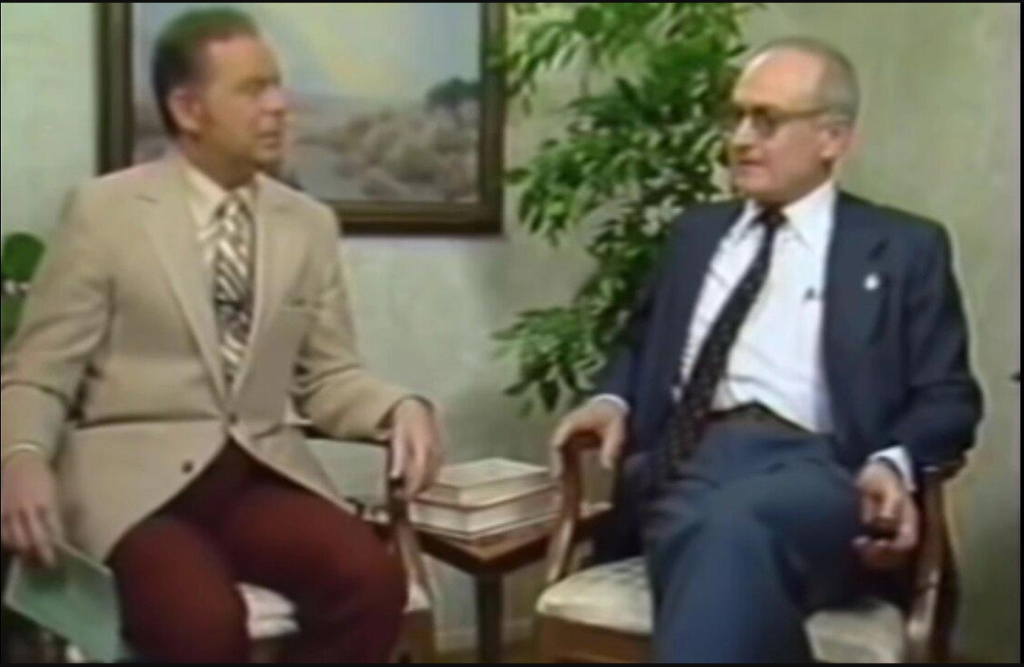
In his famous interview in 1984 by G. Edward Griffin, unlike Hollywood’s image of spies, secret codes, and espionage, Bezmenov argued that the real battle was psychological. He claimed that only a small portion of Soviet resources was devoted to traditional intelligence gathering. The overwhelming majority, he said, was dedicated to influencing how people thought, what they believed, and how they viewed their own society. According to Bezmenov, the objective was to alter the perception of reality itself until citizens became incapable of defending their families, communities, and country.
He called this process ideological subversion, and he believed it unfolded in four stages.
Stage One: Demoralization
The first stage, demoralization, takes fifteen to twenty years—roughly the time required to educate an entire generation. Bezmenov argued that through education, media, and culture, a society’s traditional values can gradually be replaced by a new ideological framework. Once that process is complete, facts become less important than beliefs. Citizens become resistant to evidence that contradicts their worldview, regardless of how compelling that evidence may be.
Bezmenov believed that this stage had already been completed in the United States by the early 1980s.
Stage Two: Destabilization
Once a population has been demoralized, attention shifts to the pillars of society: the economy, foreign policy, national defense, and political institutions. Bezmenov argued that this stage could occur in as little as two to five years. The goal is not to change culture, but to weaken confidence in the systems that maintain stability and prosperity.
Stage Three: Crisis
The third stage is crisis. According to Bezmenov, once enough instability has been created, a nation can be pushed toward a political or economic crisis in a remarkably short period of time. During such moments, citizens become willing to accept solutions they would have rejected under normal circumstances.
Stage Four: Normalization
The final stage is what Bezmenov called normalization. Borrowing a term from Soviet political language, he described a period in which a new political order becomes established and accepted as normal. Government authority expands, dissent becomes less tolerated, and citizens are told that stability has finally been restored.
Are We Watching It Happen?
Many Americans dismissed Bezmenov’s warnings during the Cold War. Today, however, his observations deserve another look.
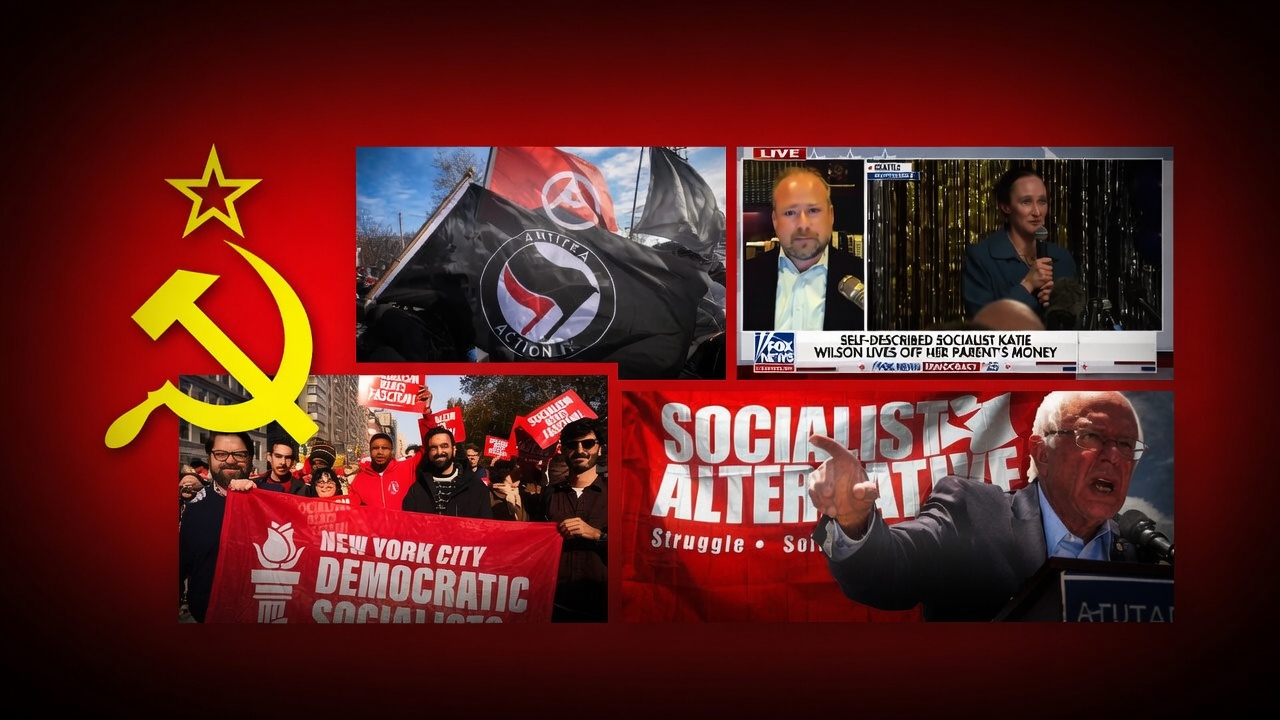
Politicians who openly identify as socialists now hold positions of influence throughout the American government. Ideas once considered radical are increasingly presented as common-sense solutions. Expanded government management of economic life, wealth redistribution, price controls, government-operated services, speech regulation, and growing bureaucratic oversight have moved from the political fringe into mainstream debate.
In New York, Mayor Zohran Mamdani openly embraces democratic socialism and advocates a greater role for government in economic affairs, including government-operated grocery stores and the rent freeze scheme. In Seattle, Mayor Kathie B. Wilson has championed policies that critics argue move the city toward a more government-centered model of governance. Supporters see these developments as necessary reforms. Critics see the steady expansion of state power at the expense of personal liberty, private enterprise, and local decision-making.
The larger question is not whether one agrees with socialism. The larger question is whether the United States is moving toward a system in which government plays an increasingly dominant role in every aspect of life.
Social media has accelerated this process dramatically. Ideas can now be transmitted to millions of people instantly. Emotional narratives often spread faster than facts. Complex issues are reduced to slogans. Entire generations are shaped by algorithms, influencers, and digital communities that reinforce existing beliefs rather than challenge them.
Bezmenov warned that a demoralized society does not suffer from a lack of information. It suffers from an inability to process information objectively. Looking around today, many Americans would argue that this observation feels increasingly relevant.
Whether Yuri Bezmenov was entirely right is ultimately less important than the question he posed.
Can a free society lose its freedom gradually, without recognizing what is happening until it is too late?
History suggests that it can.
That was Yuri Bezmenov’s warning.
The question before us is whether we are willing to listen.