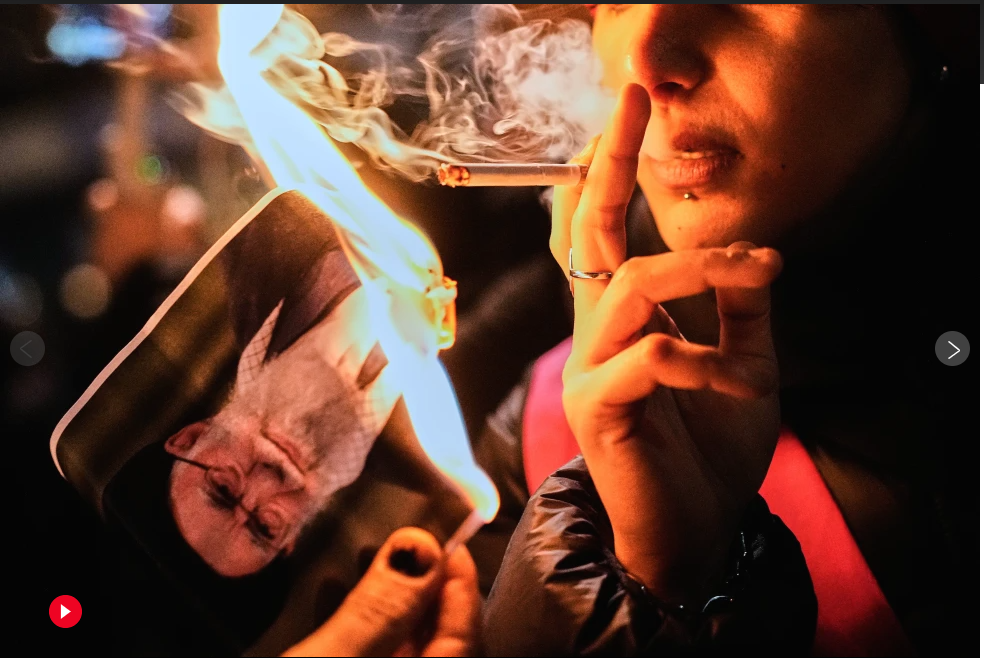
Since late December 2025, a powerful new uprising has been surging across Iran, igniting hope for real change.
The Iranian people, enduring nearly half a century of oppression under a ruthless theocratic regime, have risen time and again to shatter the chains of the Islamic Republic—only to be met with unimaginable brutality and unyielding force.
This latest revolt is no different; indeed, observers worldwide have unanimously condemned the regime’s savagery as exceeding all prior atrocities, underscoring the desperate need for decisive action.
In this compelling article, I present a transformative solution—a clear path out of this endless cycle of despair—that will not only secure freedom for the Iranian people but also pave the way for lasting peace in the Middle East, ultimately fostering global stability and hope for humanity.
Before proceeding, let me establish these undeniable truths:
The Islamic Regime in Iran DOES NOT represent the nation or its people. In essence, the Islamic Republic is not Iran—it is an impostor.
By its very nature, the Islamic regime is an occupying force. Any government that deploys foreign mercenaries to crush its own citizens’ resistance qualifies as an invader, plain and simple.
The Islamic Republic mirrors the tyrannical puppet states imposed by the Nazis in Poland or the Soviets in East Germany—illegitimate and despised.
The regime’s core essence and origins vividly illuminate its barbaric actions. This is a terrorist entity, first victimizing the people of occupied Iran and then extending its malice to terrorize the world at large.
Resistance and civil disobedience are the inalienable rights of the Iranian people. Every occupied nation possesses the moral and historical imperative to defy and dismantle its oppressors.
If you challenge any of these irrefutable facts, there’s little point in continuing—stop here and reflect on the evidence.
Unmasking the Tyranny: The Regime’s Dark Origins
The Deceptive Revolution: How Power Was Seized
The Islamic Republic rose from the ashes of the 1979 revolution against Iran’s last Shah, Mohammad Reza Pahlavi—a pivotal moment hijacked by extremists.
A diverse coalition fueled the 1979 uprising, including the religious faction spearheaded by Khomeini, whose shadowy past raises profound doubts. His elevation to Grand Ayatollah was a contrived maneuver to evade execution under the Shah, and even his nationality remains shrouded in controversy.
The Islamic Regime in Iran DOES NOT represent the nation or its people. In essence, the Islamic Republic is not Iran—it is an impostor.
Influential leftist factions—Marxists, Socialists, Communists, and hybrid Marxist-Islamic groups like the Mojahedin-e-Khalq (MEK)—rallied behind Khomeini as the revolution’s figurehead, naively believing they could steer the post-victory course toward their visions.
Countless intellectuals were blinded to the Ayatollah’s insidious agenda: forging a theocratic dictatorship, enforcing Islam’s most rigid interpretations as dictated by mullahs and Islamists.
Mere months after overthrowing the Shah, a manipulated referendum confronted an emotionally charged nation with a binary trap: Islamic Republic—Yes or No?
Thus, the regime’s architects entrenched their grip, unleashing a reign of terror.
Dissident executions ensued, and within three years, the regime systematically exterminated its former allies, consolidating absolute control through sheer brutality in the clutches of fanatical, power-obsessed zealots.
Incredibly, the Iran-Iraq War proved a godsend for the fledgling tyrants, providing a pretext for emergency measures and martial law to obliterate any lingering opposition.
Tehran’s iconic Behesht-e-Zahra cemetery bears silent witness, with vast sections hiding hundreds of thousands of young Iranians in unmarked or mass graves. The full scope of this regime’s atrocities will shock the world once it falls—remaining concealed from outsiders until that liberating day.
It is no hyperbole to parallel the horrors unfolding in Iran—past and present—with the genocidal crimes of Nazi concentration camps or Soviet gulags in occupied territories during and after World War II. The evidence demands we confront this reality.
The Poisonous Ideology: Fueling Global Hatred
From its inception, the regime brazenly proclaimed its venomous animosity toward the West, its lifestyle, and its cherished values—dismissing them as immoral and decadent while harboring an unquenchable hatred for Israel, hypocritically branding it the “occupying regime.”
Revolutionary Islam forms the bedrock of Iran’s ruling cabal. So-called “moderate Islam”—a contradiction in terms—was utterly rejected, with any straying from the regime’s draconian edicts deemed intolerable.
Retrospectively, the regime’s structure eerily emulates authoritarian communist dictatorships: a Supreme Leader who overrides all governmental branches, commands the military, and embodies unbridled tyranny cloaked in religious fervor. Here, dissent against the regime equates to blasphemy against God, inviting inevitable and merciless retribution.
Every Islamic terrorist organization drew funds from Iran’s plundered treasury, courtesy of the regime’s lavish alliances with the most depraved elements imaginable.
As a teenager, I vividly recall daily newspaper listings of “Corruptors on Earth”—individuals executed by firing squads or publicly hanged, their fates broadcast as warnings.
Compounding the cruelty, the regime callously demanded that victims’ families foot the bill for the bullets before reclaiming their loved ones’ bodies.
Endless tales recount parents brutalized and humiliated for nurturing children bold enough to challenge the Islamic overlords.
Khomeini arrogantly proclaimed himself “Leader of the World’s Muslims,” accountable solely to God. Defiance was heresy, punishable by torture followed by death.
Simultaneously, the regime cultivated proxies throughout the Middle East—from Iraq to Lebanon to Palestine.
Every Islamic terrorist organization drew funds from Iran’s plundered treasury, courtesy of the regime’s lavish alliances with the most depraved elements imaginable.
It’s hardly shocking that since 1979, Islamic terror networks have grown bolder and more potent under this regime’s patronage.
The Islamic regime’s web of terror stretched from the Middle East to South America and Europe.
Its agents prowled Europe unchecked, assassinating dissident leaders with impunity—from France to Germany to Switzerland, targeting politicians, artists, and anyone daring to oppose them.
“Israel must be wiped off the map” enshrines the regime’s genocidal ethos. To underscore its anti-Semitic fervor, one of its earliest executions claimed Habib Elghanian, a revered Jewish industrialist and philanthropist, his sole “crime” being an Iranian Jew who cherished his homeland.
The regime’s catalog of terrorist atrocities is infamous among those who refuse to amnesia. Consider these stark reminders:
- Seizing U.S. embassy staff in Iran as hostages for 444 harrowing days ·
- Bombing the Marine barracks in Lebanon, slaughtering 241 U.S. Marines ·
- Bombing the Al-Khobar Towers in Saudi Arabia on June 25, 1996; claiming 19 U.S. Air Force lives ·
- Bombing a Jewish center in Buenos Aires on July 18, 1994; murdering 85 innocents.
I can never erase the memory of school notebooks emblazoned on their back covers with this ominous decree:
“Islam will become dominant and rule the world.”
Dismiss it at your peril—you may live to regret it.
The Unbreakable Spirit: Iran’s History of Resilience and Revolt
The Iranian people embody peace and extraordinary patience by nature.
Over millennia, we forged one of history’s mightiest empires, spanning Asia, Africa, and Europe. We take immense pride in our legacy of human rights and respect for all—including vanquished foes and equals.
Invaders perpetually targeted mystical, mighty Persia for its riches, yet each was inevitably repelled.
Our salvation lies solely with our people: rising united against this criminal syndicate in a decisive confrontation. True peace and prosperity never arrive via foreign boots.
Alexander (whom Persians refuse to deem “the Great”) bested Darius III only to perish far from home. Iran endures.
Mongols, Turks, and even Afghans seized temporary footholds, but none conquered our cultural soul—the radiant essence that birthed this land and its indomitable people.
The sole incursion that nearly extinguished our national spirit was the 7th-century Muslim invasion.
Savage, primitive Arab hordes, freshly converted to Islam, overran a weakened Persian Empire amid political chaos.
Irrespective of causes, Iran succumbed to these marauders, who looted and devastated the land for years.
Inevitably, these uncivilized conquerors proved incapable of governing the vast empire they had improbably claimed, encompassing Persia and beyond.
Thus, they beseeched Persian elites, governors, and statesmen for guidance.
What the West mislabels “Islamic Civilization” is, in truth, Persian brilliance veiled in Arabic script.
Other grand civilizations, like Egypt and Syria, also crumbled before Islamic invaders.
Yet Persia’s fall stands apart due to our unyielding resilience in preserving language and culture.
No other subjugated nation withstood the invaders’ ferocity; they forfeited their tongues, histories, and heritages, embracing Arabic wholesale.
Only in Iran, among purportedly Islamic nations, does the populace retain its native language.
We incorporated Arabic loanwords, Persianizing them, and adapted the Arabic alphabet by adding four letters to forge our own.
The Shahnameh stands as the ultimate national jewel—a masterpiece safeguarding our language and culture for Persian speakers, especially Iranians.
Even in adopting Islam officially, Iranians innovated Shi’ism, mirroring ancient monarchies where heirs succeeded fathers.
This current uprising won’t be the finale; history proves that illegitimate occupiers inevitably collapse.
The vast majority of Iranians identify as Shi’i.
Leaping to today, numerous scholars assert that the Islamic Revolution marked a second Islamic conquest: radical Muslims, dreaming of reviving a bygone caliphate’s glory, reconquered Persia to launch a global terror campaign rooted in fear, coercion, and hatred of dissenters.
In our era of liberal democracies and rising powers, the regime encountered fierce external pushback—though occasionally bolstered by complicit autocracies.
Yet, foreign maneuvers pale beside the Iranian people’s heroic stand against the regime’s malevolence, bearing the gravest sacrifices.
Each foreign strike against the regime provoked intensified domestic repression, with innocents executed for their courage.
Since its founding, the Islamic Regime has quashed uprisings every few years. This sham “republic” features an omnipotent Supreme Leader who handpicks presidential puppets with negligible authority.
This current uprising won’t be the finale; history proves that illegitimate occupiers inevitably collapse.
The regime’s utopian Islamic vision for Iran lies in ruins, humiliated and exposed. Its escalating violence is merely the death throes of a cornered beast.
When valiant Iranian women cast off their mandated hijabs, declaring themselves equals unwilling to bow to caprice, they unmasked the regime as a cabal of retrograde terrorists—vulnerable and defeatable with strategic resistance.
In the Ayatollahs’ warped Islamic dogma, Iranians were meant to mirror Afghanistan’s Taliban-subjugated masses. Ironically, the Taliban more authentically embodies Islam, yet even they couldn’t impose medieval shadows on Iran’s enlightened society.
The Path to Victory: A Bold Alliance for Freedom and Peace
By enlisting foreign mercenaries from Iraqi allies and Lebanon’s Hezbollah, the regime massacred protesters in the recent uprising—with reports exceeding 15,000 slain.
Amid the chaos, U.S. President Donald Trump boldly urged Iranians to overthrow the regime, vowing military threats and aid if the bloodshed persisted.
Millions inside Iran clung to hope that his backing would hasten the tyrants’ end.
Abruptly, the president reversed course, thanking the regime days later for sparing nearly 800 detained demonstrators.
With utmost respect for President Trump, whom I endorse, no foreign leader—American or otherwise—wields the right to dictate an ancient nation’s destiny. Iranians have always navigated such influences independently.
Our salvation lies solely with our people: rising united against this criminal syndicate in a decisive confrontation. True peace and prosperity never arrive via foreign boots.
Yet Israel stands apart in Iran’s plight, bound by millennia of profound friendship and collaboration.
The Hebrew Bible hails Cyrus the Great as God’s anointed Messiah, with figures like Esther, Mordechai, Daniel, and Habakkuk thriving in Iran.
As a Jew myself, I constantly emphasize to friends that Israelites (Jews) predated the Persian Empire in Iran. We served, defended, and enriched its culture and civilization. Innumerable Iranian-Jewish luminaries in music, history, science, and beyond devoted their lives to this shared homeland.
Israel emerges as Iran’s innate ally. Amid a region of predominantly Islamic states—many barely a century old—these two venerable nations share deeper affinities than with any neighbors.
Through backing Palestinian terror outfits like Hamas, Islamic Jihad, the PLO, and more, Iran’s regime menaces Israel’s existence.
Yet Israel stands apart in Iran’s plight, bound by millennia of profound friendship and collaboration.
Israel, a compact nation of extraordinary resilience, has thwarted foes since 1948. Notably, Iran’s late Shah was among the earliest to recognize the Jewish state.
The horrors of October 7, 2023, exposed the Tehran regime’s lethal proxies: funding, arming, and orchestrating massacres of innocent Jewish families. Envision this life-despising cabal armed with nuclear weapons—catastrophe looms.
Israel’s vigilant oversight of Iran’s inhumane regime is unmatched. In defending itself, Israel inadvertently aids Iranians’ quest for liberation from Tehran’s terrorists.
Mossad’s precision strikes in Iran—disrupting nuclear pursuits, eliminating rogue scientists and IRGC chiefs—benefit both nations by disarming a peril to humankind.
Post-regime, an Iran-Israel alliance would naturally flourish. Iran, healing from dual Islamic wounds, would reclaim its stature among global powers—as a beacon of peace and progress.
An Iran-Israel axis would cement Middle Eastern tranquility, unrivaled in its ancient roots of shared principles and partnership.
Under these regional titans’ guardianship, a stable Middle East would prevail, signaling the demise of rogue elements.
This pact would gift America profoundly: a harmonious, prosperous Middle East freeing U.S. forces for priorities in South America and Asia.
Global power dynamics would tilt decisively toward the U.S., compelling Russia and China to concede. Exploiting Iran to sabotage America and sow regional chaos would cease. Aspiring powers like Turkey and Saudi Arabia would inevitably embrace peace with Israel and cooperative frameworks.
A World Transformed: The Imperative of Regime Change
Dismantling Iran’s terrorist regime would bless the globe, eradicating Islamic terrorism at its source and halting perpetual regional conflicts and refugee crises flooding the West.
Through peace and unity, regional prosperity would thrive eternally.
Podcast: Play in new window | Download